
In today’s world, most companies rely on large amounts of data to function day to day. But this data is usually stored across multiple platforms. To access it, you need to open different apps and platforms at work every day painstakingly.
Having your data from CRMs, databases, and spreadsheets in one place can help solve this problem. And that is exactly what ETL tools can do.
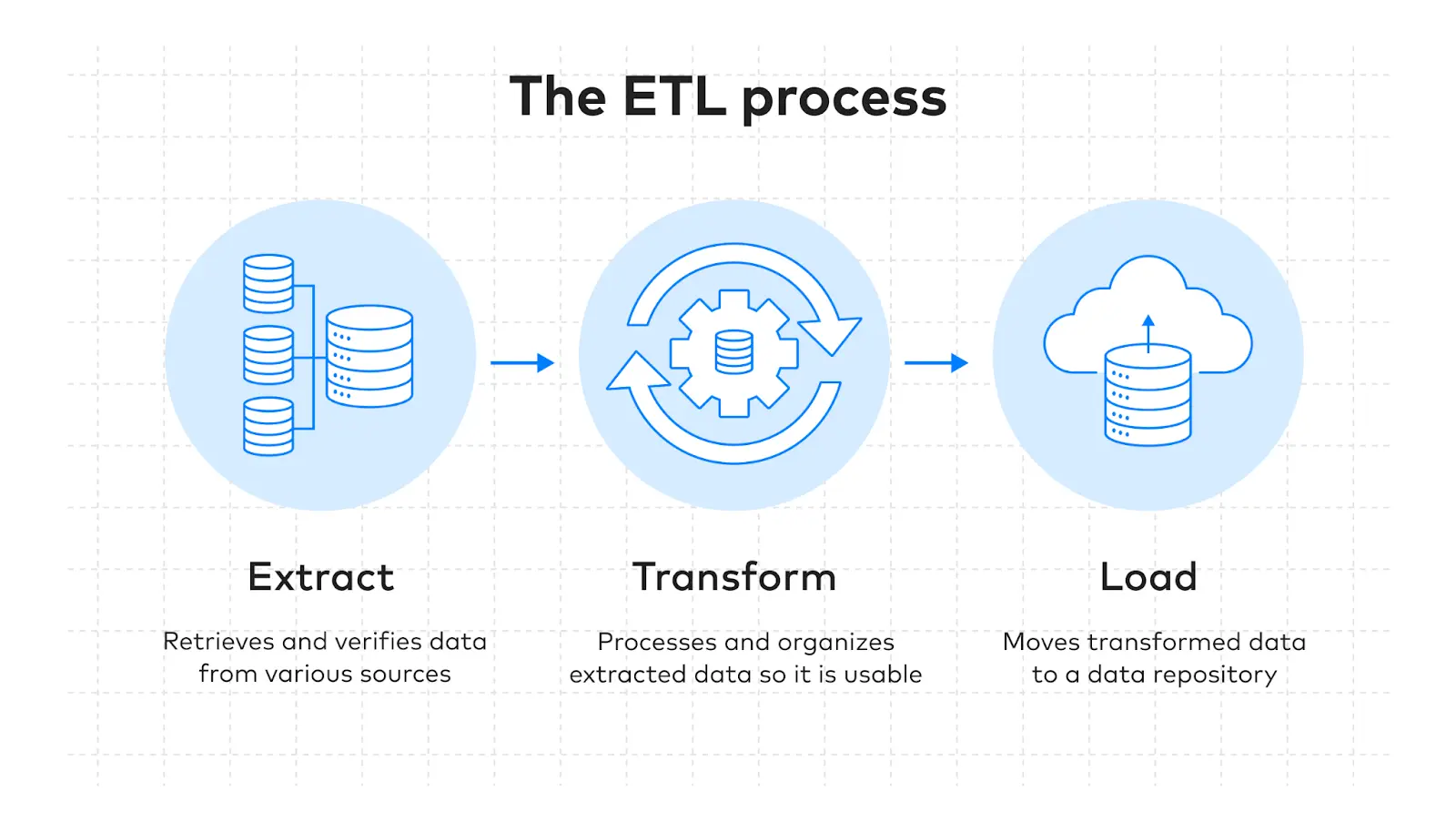
These ETL tools take data from different sources and put it in a unified form. Then, they put this unified data into your data warehouses.
Sounds perfect, right? Well, that might be true, but only if you pick the right ETL tool for your data migration framework.
To help you pick the best tool, I have compiled this comprehensive list of the top ETL tools for 2026. Whether you are looking for an enterprise solution or free, open-source ETL tools, you will find your match in this guide.
Let’s begin with a quick look at my top choices.
Quick Comparison: Top ETL Tools
Here is a brief overview of the best ETL tools available today.
| Tool | Best For | Key Strength | Connectors |
| Hevo Data | No-code teams | Simple, reliable pipelines | 150+ |
| Fivetran | Analytics teams | Zero-maintenance pipelines | 700+ |
| Airbyte | Technical teams | Open-source flexibility | 600+ |
| Informatica | Large enterprises | Data governance & scale | 300+ |
| Talend | Hybrid deployments | Data quality & integration | 900+ |
| Matillion | Cloud warehouse users | Pushdown ELT optimization | 150+ |
| AWS Glue | AWS ecosystem users | Serverless Spark | AWS-native |
| Azure Data Factory | Microsoft shops | Hybrid cloud connectivity | 90+ |
| Google Dataflow | Stream processing | Unified batch/streaming | GCP-native |
| Apache NiFi | Real-time data flows | Open-source, visual UI | 100+ |
| Databricks Lakeflow | Big data & ML | Lakehouse architecture | Native + files |
How to Find the Right ETL Tool?
 Before exploring specific platforms, let us first understand how you can choose the perfect ETL tool:
-
Connector Breadth
Any modern pipeline requires data sourcing from various sources. These include SQL databases, SaaS apps, and file storage.
For ETL tools, more connectors mean more compatibility. Any ETL tool with a large number of connectors will require fewer gaps to fill with custom code.
-
Real-Time Capabilities
Many companies now require real-time inputs, such as Change Data Capture (CDC), with sub-minute latency. Features like these are critical for ETL tools to provide real-time insights.
-
Pricing Predictability
Any ETL tool with a consumption-based model might seem cheap at first. But as your usage grows, so will your bills.
Your preferred ETL tool must have predictable costing that you can account for every month.
-
Ease of Use
An ETL tool that is not easy to use or interactive defeats the entire purpose of the tool.
Make sure you can use the ETL tool effectively. This ensures the tool saves you time rather than making your work even more complex.
Top ETL Tools for 2026
-
Hevo Data
Best For: Teams looking for simple and reliable pipelines
Hevo Data can connect multiple data sources through a unified no-code interface.
It also has a self-healing architecture that retries automatically if it detects a failed execution.
Moreover, the schema changes are handled automatically without disrupting downstream processes.
Key Features:
Visual pipeline builders, auto-healing, and real-time monitoring.
Pricing:
Event-based pricing model that starts at $299/month. You can also use their free plan, which provides access to 1M events per month.
-
Fivetran
Best for: Any analytics team dependent on cloud warehouses
Fivetran is a great tool for managing ETL pipelines with over 700 pre-built connectors. It supports automatic schema drift handling.
For better governance, Fivetran also works natively with Databricks Unity Catalog.
Key Features:
700+ connectors, native Unity Catalog integration, and built-in dbt support.
Pricing:
Usage-based Monthly Active Rows (MAR). There is also a free plan available.
-
Airbyte
Best for: Engineering teams that require customizable ETL tools
Airbyte is an open-source platform that is fundamentally free to use. It supports over 600 connectors and many advanced features.
For Airbyte, you will only pay for managed infrastructure or enterprise features. The base platform carries no costs, helping you save on subscription fees!
Key Features:
600+ connectors, dedicated Connector Development kit for customisation and CDC support
Pricing:
Free open-source code, pricing for managed cloud services
-
Informatica IDMC
Best For: Large enterprises that carry complex requirements
Informatica primarily targets enterprises with advanced governance needs. This includes combined connectivity with AI-assisted mapping.
Moreover, the tool also supports metadata management.
Key Features:
300+ connectors, AI-assisted mapping, and petabyte-scale processing
Pricing:
Custom enterprise licensing with 3-6 month implementations
-
Talend Cloud
Best for: Organizations looking for a hybrid deployment
Talent supports over 900 connectors. This includes deeper integrations with ecosystems such as Hadoop and Spark.
Moreover, it also combines ETL with data quality and master data management.
Key Features
Over 900 components, visual code generation, and hybrid deployment
Pricing
Custom pricing for tiered plans
-
Matillion
Best For: Teams looking for cloud-native ETL for Snowflake, BigQuery, etc.
Matillion mainly focuses on pushdown ELT architecture. It leverages your cloud warehouse compute power instead of requiring a dedicated server.
In 2026, the company also introduced its AI assistant ‘Maia’ for pipeline optimization.
Key Features:
Pushdown ELT, cloud warehouse optimization, and AI assistance
Pricing
Credit-based pricing model
-
AWS Glue
Best For: Organizations that are already dependent on AWS
AWS Glue is a serverless ETL solution based on Apache Spark. With a tight AWS integration, it can provide features like automated discovery and job scheduling.
Key Features:
Serverless architecture, schema interfacing, and deep AWS integration
Pricing:
$0.44/DPU-hour (DPU = Data Processing Unit)
-
Azure Data Factory
Best For: Microsoft-centric enterprises
Azure Data Factory is a great ETL tool that supports hybrid cloud. It sources data from various destinations and provides on-premise cloud migrations.
Key Features:
90+ connectors, visual and code-based development, and CI/CD workflows
Pricing:
Based on consumption and per-activity
-
Google Cloud Dataflow
Best For: Unified streaming and batch requirements
Using Apache Beam, Google Dataflow provides a unified architecture. It boasts serverless autoscaling.
Additionally, there are real-time use cases such as clickstream and fraud detection.
Key Features:
Sub-second latency, auto-scaling, and Apache Beam compatibility
Pricing:
Pay-per-use, depending on vCPU, memory, and data processed
-
Apache NiFi
Best For: IoT and hybrid streaming
Apache NiFi is a great open-source ETL tool. It provides an interactive flow design interface that is easy to understand.
The tool also supports automated data flow and provenance tracking for better efficiency.
Key Features:
100+ connectors, real-time processing, and edge computing support
Pricing:
Free to use open-source tool
Many modern ETL tools now include data cleaning tools or built-in quality features to standardize records before loading.
How to Choose the Right ETL Tool?
Here is a handy guide on common situations and the best ETL tool for its specific needs:
| Your Situation | Best Tool Category | Example Tools |
| No-code team that needs simplicity | Low-code platforms | Hevo Data, Matillion |
| Technical team that needs flexibility | Open-source | Airbyte, Apache NiFi |
| Large enterprise with governance | Enterprise platforms | Informatica, Talend |
| AWS cloud environment | AWS-native | AWS Glue |
| Microsoft shop | Azure ecosystem | Azure Data Factory |
| Real-time streaming required | Streaming-optimized | Google Dataflow |
| Big data + ML workloads | Lakehouse platforms | Databricks |
If your project involves system replacement or cloud moves, data migration frameworks can complement ETL tools with a broader delivery structure.
Conclusion
As ETL Tools continue to rise in 2026, you, as a buyer, will face many tough choices. One of these also includes deciding between ETL vs ELT for your data migration services.
Whether it’s paid tools like Informatica or open source ETL tools like Airbyte, the choice depends on your exact needs.
While comparing ETL tools for your team, ensure that you consider your exact needs. These may include:
- The number of connectors needed for your existing systems
- Deployment flexibility of your cloud environment
- Latency needs for both real-time and batch scenarios
- The right pricing model
- Learning curve that your team can handle
If you are planning a large-scale data project, your requirements will rise exponentially. To make sure your data stays secure, consider partnering with an expert for your data needs.
For professional guidance, I recommend consulting our experts at Augmented Systems. We specialize in helping organizations select the perfect ETL tools for their requirements.
Whether it’s for daily data unification or a massive data project, we can help you immensely. Our teams specialize in helping organizations select and implement the perfect ETL process for their current workflow.
Teams handling event-driven workloads should also understand real-time data analytics when evaluating modern ETL platforms.
Ready to make your data integration simpler and more efficient? Contact Augmented Systems today to receive the expert guidance you require.
FAQs
1. What are ETL tools, and why are they important?
ETL tools are software platforms that extract data from various sources, transform it into a usable format, and load it into a destination like a data warehouse. They are essential because they automate data integration, save countless hours of manual work, and ensure your analytics are based on accurate, consistent information.
2. What is the difference between ETL and ELT tools?
The main difference is the order of operations. Traditional ETL tools transform data before loading it into the destination. Modern ELT tools load raw data first and transform it inside the data warehouse. This ETL tools comparison matters because ELT typically offers faster initial loads and leverages cloud warehouse power for transformations.
3. What are the best open source ETL tools available?
Popular open source ETL tools include Airbyte for its extensive connector library, Apache NiFi for real-time data flows, and Singer for lightweight pipelines. These tools offer flexibility, no licensing costs, and complete control over your data infrastructure, ideal for technical teams with specific customization needs.
4. How do cloud ETL tools differ from traditional on-premise solutions?
Cloud ETL tools like Fivetran, Hevo Data, and AWS Glue offer serverless architectures, automatic scaling, and pay-as-you-go pricing. Unlike traditional on-premise tools that require hardware maintenance and capacity planning, cloud solutions handle infrastructure automatically so you can focus on insights, not servers.
5. When should a company hire a data migration consultant?
A data migration consultant is valuable when you’re tackling complex migrations, selecting among multiple ETL tools, or ensuring minimal disruption during platform switches. At Augmented Systems, our consultants help you evaluate options, design robust pipelines, and execute migrations that protect your data integrity.