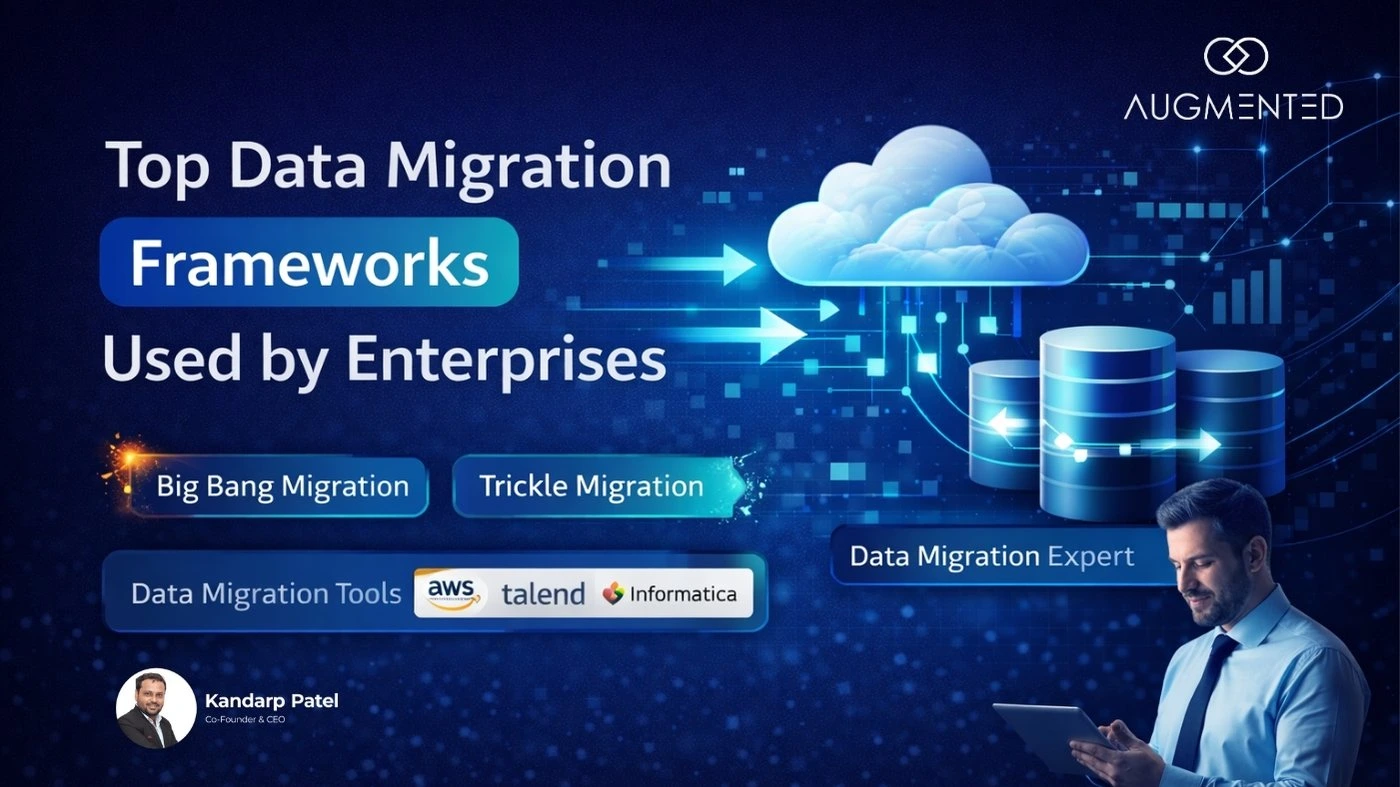
Moving your business data to a new place can be a daunting challenge. Whether it’s to a new modern cloud platform or an analytics system, data migration is not easy.
Surveys suggest that only around 16% data migration projects are actually delivered on time and on budget. This showcases how often data migration fails to live up to business expectations.
The solution? Ensuring a structured approach towards your data migration.
In this guide, I will walk you through a successful data migration framework.
With clear data migration examples, this guide will help you succeed with your data migration strategy.
Let’s get started by first understanding what a data migration framework actually is.
What is a Data Migration Framework?
Think of it like a detailed blueprint that strategizes every step of your data migration. Data Migration Frameworks are structured to avoid the risk of losing your data.
The steps involved predict potential data migration challenges and solve them before they become real issues.
Your Data Migration Plan: Step-by-Step Process
Any successful data migration project plan requires a pre-planned journey.
Here are the steps most experts recommend:
1. Assessment / Scoping:
It is very important that you plan your next moves before actually starting your data migration. Ensure that you collect your existing data and analyze its size and location. Create a backup if you can, and choose a strategy that fits your migration needs.
2. Design & Build:
Design a data migration framework that shows exactly how your data will be extracted and transformed. This stage is vital to building specific migration pipelines you will use to move your data.
3. Testing & Validation:
Ensure that you run multiple tests before moving your entire data. This includes migrating small batches of data first to test your current framework. Such checks will ensure better performance and accuracy in your final move. Tools used for ETL (Extract, Transform, Load) can work incredibly well for automating your testing.
4. Execution & Go-Live:
Let everyone know about your planned downtime window before carrying out your data migration. Before your final execution, make sure that you have a rollback plan. This will protect your data in case of unforeseen errors.
5. Final Review
Done with your data migration? Now it's time to shut down your previous system. But before you do so, make sure your data survived the journey. Only after the final review of the data in your new system should you delete your old system.
How to Choose the Right Tool and Approach?
Making the right choice for your data migration framework will determine its final outcome. Here are some popular tools being used in the industry today:
Popular Data Migration Approaches
Here are the two main types of data migration you can choose to migrate your business data;
1. Big Bang Migration
In this type of migration, all of your data is moved at once. While this process is faster, it can also lead to severe server downtimes. Moreover, moving all your data at once can be risky. One wrong command can lead to complete data loss.
2. Trickle Migration
In this approach, your data is moved over time in phases. This results in a more complex process, but it is also safer than other alternatives. It allows business operations to continue working and causes minimal disruption.
Why Do You Need a Data Migration Expert
Even after choosing the best data migration framework, your migration can still encounter issues. To ensure your move stays within budget and on schedule, you need a dedicated expert.
This is where an experienced data migration consultant comes into focus. They can help you avoid common issues associated with such data migration services.
Using their expertise, you can make sure that your data migration project plan runs flawlessly. They can turn your risky IT project into a smooth data transformation.
For your business needs, I recommend consulting our data migration experts at Augmented Systems.
We have a certified team of data migration consultants that specialize in executing custom data migration frameworks. They understand exactly what your business needs and tailor their strategies accordingly.
Augmented Systems believes in creating long-lasting partnerships. Our guidance and support go well beyond your project requirements.
Ready to move your data with confidence? Contact Augmented Systems today to receive a tailored consultation on the right strategy!
FAQs
1. What is a data migration framework?
A data migration framework is a structured, repeatable methodology for planning, executing, and validating the movement of data from one system to another. It provides a blueprint to ensure the project is organized, secure, and successful, reducing risk for businesses of all sizes.
2. What should be included in a data migration project plan?
A robust data migration project plan is essential. It should detail key phases: scoping and assessment, design, testing, execution, and post-migration review. It must also include timelines, resource allocation, risk management strategies, and clear criteria for success.
3. Can you give a real-world data migration example?
A classic data migration example is a company migrating its on-premises customer relationship management (CRM) database to a cloud-based platform such as Salesforce. This involves extracting the old data, transforming it to fit the new system's structure, and loading it securely, a perfect application of a structured data migration framework.
4. When should a company hire a data migration consultant?
Hiring a data migration consultant is wise when facing complex, business-critical moves, when in-house expertise is lacking, or when ensuring minimal disruption. A consultant brings proven methodologies, tools, and experience to navigate challenges, making the investment in expert data migration services highly valuable.
5. What is the role of an entity framework in data migration?
In application development, a data migration entity framework (like .NET Entity Framework) is often used to manage database schemas and create versioned scripts that define changes. It ensures the structure of the target database aligns perfectly with the application's needs during a migration.