
There’s one story I often think back to when talking about data governance.
In 2018, British Airways’ website was hacked, and customers’ payment information was captured while booking. There were more than 400,000 customers impacted, and the incident is a good example of how damaging information can be if it’s not being controlled properly.
That is why data governance matters. It gives structure to information, protects trust, and helps a business stay in control before a small weakness turns into a bigger problem.
So here are 10 data governance best practices that can help you avoid costly compliance failures.
1. Define Your Data Governance Strategy from the Ground Up
Bad data governance rarely starts with bad intentions. It starts with nobody writing anything down.
When teams invent their own handling rules, inconsistency follows fast. Sales manages customer records one way. Finance manages them another way. Compliance then has to reconcile both versions under time pressure, which is a painful position when a regulator is already asking questions.
Frameworks like DAMA-DMBOK and COBIT give organisations something concrete to start from: who owns data, how it gets handled, and what happens when rules are broken. Structure before software.
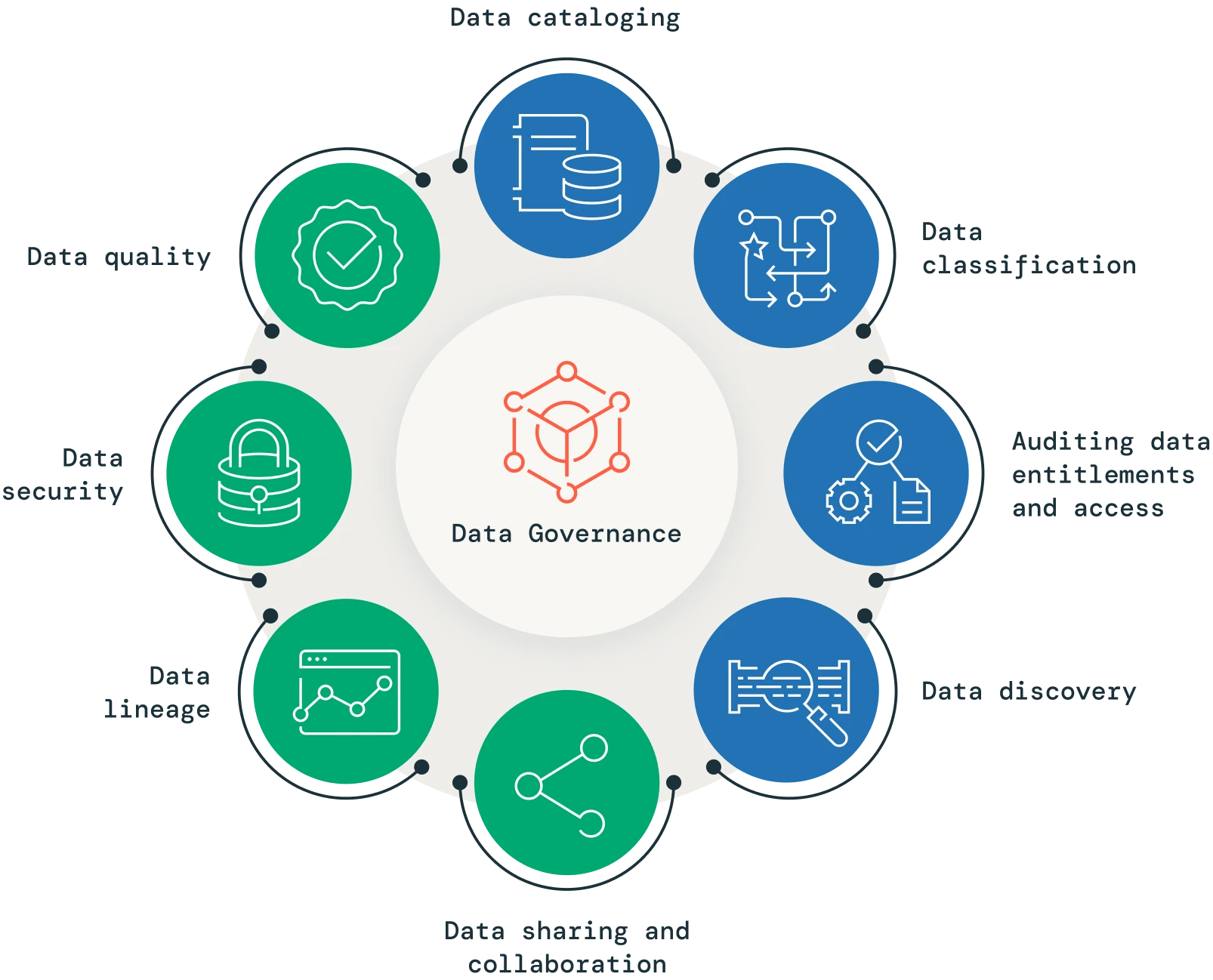
These data governance framework examples show how different businesses have put that structure into real practice.
2. Assign ownership to every important dataset
One of the most obvious ways to weaken enterprise data governance is to leave ownership unknown.
When nobody is responsible for a dataset, quality problems stay, approvals slow down, and compliance work gets pushed aside. That is a very dangerous situation when regulators ask who approved access or who validated the data collection.
Every important dataset should have a clear owner, steward, and escalation path. The owner sets the rules, the steward keeps the data accurate, and the escalation path handles exceptions. This strengthens compliance by removing confusion early.
3. Make data quality management continuous
Data quality management cannot live just in quarterly reviews. When a team finds duplicated data, missing fields, or an old record, those mistakes may already have affected reporting, customer communication, or audit preparation. That is how small data issues turn into expensive business issues.
The best way to keep up with information is by monitoring. Automated checks can flag incomplete records, unusual patterns, and inconsistent values before the damage spreads. This kind of work needs tools like Informatica Data Quality and Ataccama because they are very good at real-time review rather than manual cleaning.
This is important for both startups and large enterprises. Clean data supports better decisions, and better decisions reduce rework, delays, and compliance risk.
4. Embed compliance into daily workflows
GDPR data governance and HIPAA compliance data should not sit in a separate binder that only gets opened before an audit. They need to live in the actual workflow, from access control to retention rules to data retention reviews. Compliance is easy to ignore if it is not part of daily operations.
Healthcare teams need patient information to adhere to documented access rules, consent, and audit logs. Companies dealing with European customer data, GDPR data governance also requires a clear legal basis for processing and a timely response to breaches. The same logic applies across industries. Compliance is most effective when integrated into processes from the start.
5. Apply Master Data Management Before Silos Become the Norm
Master data management provides a business with one common version of key entities like customers, products, suppliers, locations, and key organizations. The same record can appear in multiple systems at different times with different spellings, formats, and status fields. That creates confusion during reporting and makes audits harder to defend.
When teams adopt different versions of the truth in their compliance work, compliance work is slow and delicate. A single inconsistency in a customer profile can impact billing, marketing, reporting, and regulatory documentation. Master data management mitigates the risk by keeping basic records consistent across systems.
SAP Master Data Governance, Reltio, and IBM InfoSphere MDM are the most popular solutions for managing the data. They support a stronger data governance strategy as they keep the important data under close control.
6. Classify and catalog everything early
You cannot protect what you haven’t classified. Public data, internal records, confidential files, and restricted information all require different handling rules. Without classification, teams may apply incorrect or no controls at all.
A solid classification model also aids data governance tools, retention choices, and security policies. Data catalogs from Collibra and Alation help organizations organize information at scale and make it easier for stewards to find, tag, and review records. This matters when a company is managing thousands of datasets across different departments.
7. Choose data governance tools that fit the business
Many businesses buy software before they define the problem. That leads to extra complexity, weak adoption, and shelfware. The better move is to match the platform to the actual size and shape of the business.
The right data governance tools should support lineage tracking, access controls, audit trails, and policy enforcement. They should also connect with the systems teams already in use. Purpose-built data intelligence solutions can support monitoring, reporting, and compliance oversight across complex data environments.
8. Control access with discipline
Access control is one of the most important parts of enterprise data governance.
If too many people can see sensitive records, the risk increases fast. IBM’s 2025 breach data showed that compromised credentials took an average of 186 days to detect. That gives attackers a long window to cause damage.
Role-based access control and attribute-based controls help minimize exposure. Permissions should match the role, not the individual’s convenience. Reviews should occur regularly, and access should be removed as soon as someone changes roles or leaves the company.
9. Keep Data Governance Compliance Visible with the Right Metrics
Data governance compliance needs measurable proof. A program without numbers tends to drift into guesswork, and guesswork does not hold up well during audits. Teams should track ownership coverage, data quality scores, issue resolution time, and audit readiness.
Metrics make the work visible. They also help leaders see whether a policy is working or just creating extra steps. A dashboard from a platform such as Microsoft Purview or Collibra can help teams monitor the health of the data environment without relying on manual updates.
10. Get support where the framework is complex
Some organisations can create a basic framework internally. Others need outside guidance when the environment is large, fragmented, or tightly regulated.
That is where data governance consulting can be valuable. A good partner can help define standards, shape controls, and turn policy into something practical. For businesses starting from a messy base, that support can save time, reduce risk, and keep the project from drifting.
The Next Step After Getting Data Governance Best Practices Right
Organisations that take governance seriously stop spending energy on avoidable problems and start using their data with confidence. The accountability is clearer. The audit trail is there. When a regulator asks a question, the answer is ready.
Ownership and compliance are usually the right place to start, because those two expose where the framework is weakest and fastest to address. From there, the rest of the structure has something solid to build on.
For organisations that want outside support, data governance consulting can move policy into practice, and data intelligence solutions can make governed data more useful across daily decisions.
Augmented Systems works with businesses at different stages of this journey. Contact Us when you are ready to move forward.
FAQ
1. What are the most important data governance best practices?
The most important data governance best practices include assigning ownership, building compliance into processes, improving data quality, keeping records consistent, and reviewing governance regularly.
2. Why do businesses need data governance?
Businesses need data governance to keep information accurate, secure, and compliant so they can reduce risk and make better decisions.
3. How does data governance help with compliance failures?
Data governance helps prevent compliance failures by creating clear rules for access, retention, accountability, and data handling.
4. What is the difference between enterprise data governance and data governance strategy?
Enterprise data governance focuses on applying governance across the whole organisation, while a data governance strategy defines the plan, structure, and priorities behind it.
5. How do data quality management and master data management support governance?
Data quality management keeps data accurate and reliable, while master data management ensures key business records stay consistent across systems.
6. When should a company use data governance consulting or tools?
A company should use data governance consulting or tools when it needs help building a framework, managing complexity, or enforcing policies at scale.